Hit the Brakes on AI Fraud: 5 Ways To Protect Yourself and Your Finances

From viral videos that never happened to popular songs that artists never made, the internet is full of misleading content created by artificial intelligence (AI). Fake content has never been easier to create, or harder to catch.
Generative AI has emerged as a powerful tool for criminals, enabling them to create hyper-realistic “deepfake” videos, voices, and even entire websites. By learning AI scam red flags, taking steps to protect yourself, and sharing what you know with others, you can beat scammers at their own game.
What are some common AI scams?
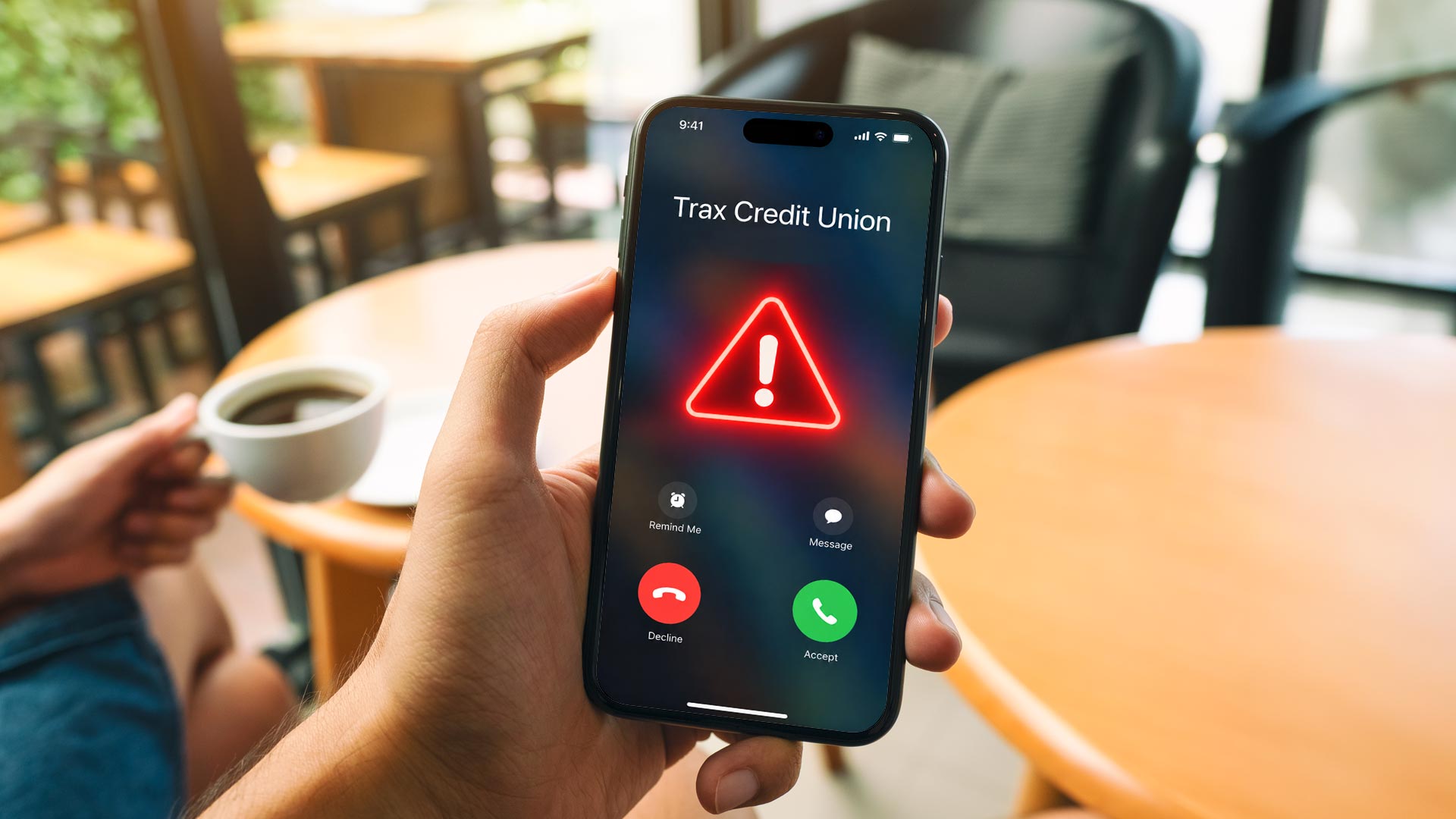
If you’re ever suspicious of a call, text, or email, immediately stop and contact the person or business directly. Always look up the number or website yourself — never rely on a suspicious individual to provide contact information.
If the caller states they are from Trax Credit Union, call us at 813-800-8729 or visit your local branch to confirm. We are always here to help.
As AI scams become more sophisticated, it is increasingly difficult to determine if an email, text, call, or even video is real. These well-crafted social engineering scams help fraudsters gain access to personal information and your financial accounts. Here are some tricky AI scams to look out for:
Voice cloning
AI can clone a person’s voice to sound like someone you know. Fraudsters will pretend to be a family member in trouble or another trusted person asking for help. They hope you’ll send money — or share sensitive information — without thinking twice.
Deepfake videos and phone calls
Generative AI can create convincing videos, photos, and audio clips that make it seem as if someone said or did something they didn’t.
Fake profiles and images
In AI image scams, fraudsters create fake profiles, impersonate individuals, or deceive people into believing false information. These scams are often used to commit identity theft or to create fake media profiles to collect personal information.
AI-generated websites and listings
Criminals set up online ads promoting high-return investment opportunities or prize giveaways. These ads lead to fake, AI-generated websites that look nearly identical to real ones. Visitors are tricked into revealing sensitive information, leading to identity theft or financial fraud.
Fake banking logins and falsified bank sites
Fraudsters know that the easiest way to break into your Online Banking is to trick you into giving them your credentials. Sometimes, they’ll create a fake copy of your bank's website and get you to submit your login information. With your login information, they gain access to your account and take it over.
Email phishing scam
AI has taken email phishing to the next level. Scammers use AI-generated text to create seemingly authentic emails that bypass spam filters. These emails often look like real account notifications or urgent requests from reputable companies.
Romance scams
AI romance scams happen when scammers use AI to create photos, voices, and videos of a person who doesn’t exist (or deepfake a real person). Then scammers set up dating profiles or social media accounts and use AI chatbots to convince people to wire money or gift cards.
How to spot AI fraud
Awareness is the most powerful tool to prevent AI fraud. Learning how to spot a scam starts with trusting your instincts and looking for these warning signs:
Unusual payment requests
If anyone asks you to send money via wire transfer, cryptocurrency, or gift cards, it is a scam. Real businesses and government agencies will not ask for payment this way.
Sense of urgency
Scammers create a crisis that requires you to act now. They’ll tell you your account is at risk of being closed, a loved one is in danger, or a once-in-a-lifetime opportunity is about to expire.
Typos in an email address or URL
Many scams sent via email and text (also known as “smishing”) try to get you to click on malicious links. The link may lead to a look-alike website created to steal your login credentials.
Always look for tiny misspellings in the email address or URL. In many browsers, you can hover your mouse over a link to see its true destination before clicking.
No previous text history
Some scams try to trick you into thinking you know the person. They may send you a message like “can we talk about it first?” or “did you still want to meet up today?” However, if the message came from an unsaved number or there is no previous text history, it is most likely a scam.
Calls from a “fulfillment center”
Scammers may call you using the name(s) of popular companies like Apple or Amazon. In some cases, the caller ID simply says “fulfillment center.” They may tell you there is something wrong with your account or that there has been suspicious activity. If it seems suspicious, hang up immediately.
Top 5 ways to protect yourself
1. Verify
AI can create convincing fake voices, videos, or images. If someone is asking for personal or financial information, end the conversation and contact the business or person directly.
At Trax Credit Union, you can always hang up and call us back. Our employees respect your privacy and comfort and will never object to extra verification steps.
2. Set up a Secret Verification Phrase
Consider setting up a verification phrase with relatives and friends to outsmart AI. Pick a random phrase like “Sunny Sunday” to use if you’re ever suspicious of a call or text.
Never share passwords or phrases on social media.
3. Control Your Digital Footprint
Scammers can use publicly shared social media content to steal photos, personal details about your life, and even your voice, making impersonation attempts more convincing. Consider setting all your accounts to private to limit who can see your posts.
4. Set Up Alerts
Set up alerts to receive email, text, or phone notifications when certain events happen in your account.
5. Slow Down
Scammers are hoping you won’t stop and think before you click. Remember to take a step back and wait before you act.
If you’ve been targeted
Contact Trax immediately at 813-800-8729 if you believe your information is compromised. Then, contact your credit card company to report the fraud. You can report fraud to the Federal Trade Commission online at ReportFraud.ftc.gov.
Remember to change your passwords regularly, and if you suspect fraud, consider freezing your credit.If you suspect identity theft, visit identitytheft.gov to learn your next steps.
What you can expect from Trax Credit Union
At Trax Credit Union, our goal is to ensure our members are safe and secure. Our Fraud Services team works tirelessly to analyze behavioral patterns and transaction data to flag potentially fraudulent activity.
Our legitimate calls will never ask our members for Digital Banking login credentials, one-time passcodes, debit card information, or advise members to send money out of their accounts. No matter who the caller says they are, if they are requesting any of these things from you, it’s not from us.